×
About UNSIS
Unified National Soil Information System (UNSIS) The National Geospatial Policy (NGP)-2022 was notified by the Government of India in the Gazette of India vide Letter No. SM/25/01/2023 dated 5th January 2023 and has designated the ‘Department of Agricultural Research and Education (DARE)’ as a Nodal Department for soil theme, while entrusting the responsibility with its unit namely ICAR-National Bureau of Soil Survey and Land Use Planning (ICAR-NBSS&LUP) with the responsibilities of adoption and development of standards/ protocols for soil surveys, building unified soil resource and soil fertility databases, development of a national soil spectral library, ensuring robust soil data management, interoperability, and dissemination of soil data through digital platforms/geoportals for national development purposes. The Steering Committee under the Chairmanship of DDG (NRM), ICAR monitor the overall progress and implementation of soil theme under the National Geospatial Policy.
The Unified National Soil Information System (UNSIS) is an ambitious initiative under the National Geospatial Policy to build a national digital soil geospatial data infrastructure by the Nodal Organization ie., ICAR–NBSS&LUP in collaboration with collaborative institutes/State Agricultural Universities with an aimed to create a centralized, standardized, and easily accessible repository of soil information for India. The UNSIS aims to unify scattered soil profile and fertility datasets from multiple sources, collect, process and integrate, that includes conventional soil survey data, laboratory analyses, soil spectral information, and remotely sensed/geo-spatial datasets. By establishing a robust, interoperable UNSIS will support multiple applications, including crop suitability assessment, precision agriculture, soil health monitoring, land resource planning, watershed management, and climate adaptation strategies. The system will facilitate rapid access to accurate, location-specific soil data for policymakers, researchers, extension agencies, and farmers, thereby improving decision-making and promoting sustainable land use practices.
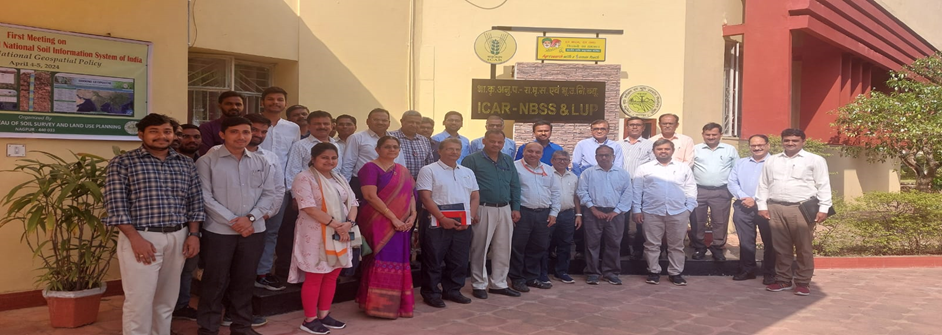
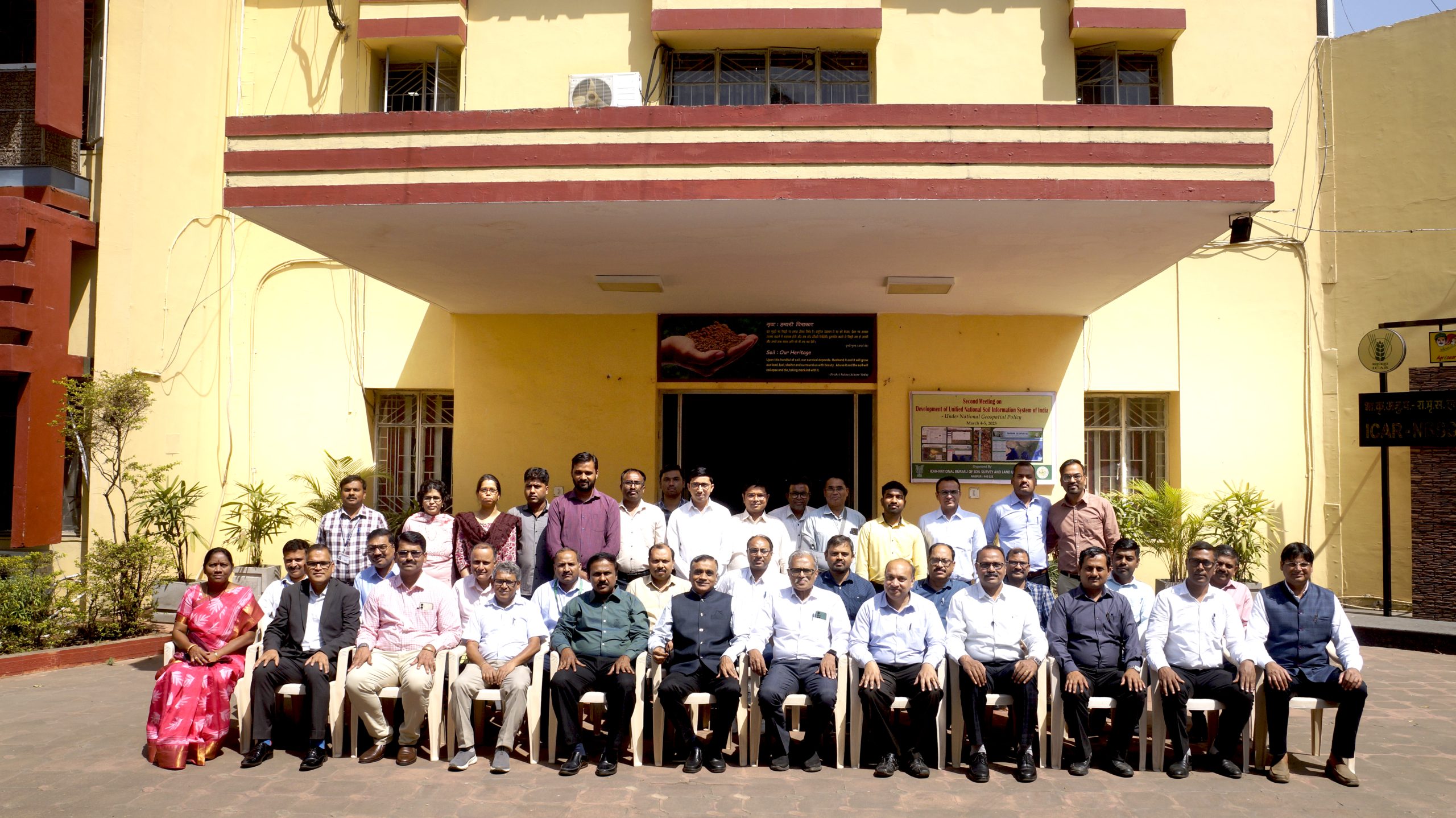
To build UNSIS, Nodal Officers from different ICAR institutes and State Agricultural Universities were identified to contribute georeferenced soil datasets, periodical review, and plan future course of action to ensure timely and effective implementation of the system. In phase-1, collection of latest soil resource data from the collaborative institutes/SAUs, process and integrate were envisaged to revise existing soil pH, soil organic carbon, and soil major nutrients (Nitrogen, Phosphorus, Potassium) status of India. The availability of latest soil information in UNSIS supports not only building a scientific Indian soil data infrastructure but also act as a tool to disseminate soil information to ensure optimum utilization of soil information to ensure nation food security and infrastructure building. It will enable evidence-based agricultural planning, optimize input use, enhance productivity, and contribute to soil and environmental conservation. Additionally, it supports climate-smart agriculture by providing critical soil data for modeling, forecasting, and mitigation strategies. In this ambitious programme, the collaboration of ICAR institutions, State Agricultural Universities, state departments, and stakeholders are vital to the success of UNSIS, ensuring that India’s soil resources are effectively mapped, monitored, and utilized for national food security, enhance rural livelihoods, and sustainable development.